Wondering whether Pacific Palisades is the right place for a design-led spec home right now? It can be, but only if you plan with unusual discipline. In a market shaped by luxury demand, hillside constraints, coastal review, and post-fire recovery rules, the best projects start with the site, not the finish schedule. If you want to build something that feels architecturally resolved and market-ready, here’s what matters most. Let’s dive in.
Pacific Palisades Starts With the Parcel
In Pacific Palisades, a beautiful concept alone is not enough. The area is defined by low-density single-family housing, open space, and rolling to mountainous terrain, especially north of San Vicente Boulevard. That means the lot itself often determines what kind of house makes sense long before you think about materials, staging, or resale strategy.
The Brentwood-Pacific Palisades Community Plan puts real weight on preserving natural topography, minimizing grading, protecting scenic views, and limiting development on geologically sensitive land. For a spec project, that shifts the early conversation away from maximum square footage and toward fit. A home that responds to the site usually underwrites more clearly than one that fights it.
Market Conditions Still Support Premium Product
Pacific Palisades remains an expensive, active luxury submarket, even with pricing volatility tied to the January 2025 Palisades Fire aftermath. In May 2026, Redfin reported a median sale price of $2.83 million and 55 median days on market. Realtor.com reported a 97% sale-to-list ratio and about 58 median days on market, with a median listing price around $3.37 million in ZIP code 90272.
That is not a market for generic product. It suggests buyers are still participating, but they are likely making selective decisions. In this setting, coherent design, clear site logic, and a move-in-ready finish level can matter as much as size.
The Likely Buyer Is an End User
The clearest buyer story in Pacific Palisades is the affluent owner-occupier. Census data for 90272 shows a median household income of $189,713, a population of 22,849, and 77.7% of adults with a bachelor’s degree or higher. That supports the idea that many buyers here have the means and interest to pay for architecture, privacy, views, and lower-maintenance new construction.
You are often designing for someone who wants a finished home, not a project. That buyer may compare your spec home against other luxury options in Pacific Palisades, Brentwood, Malibu, and Santa Monica. So the product has to feel complete in both design and lifestyle terms.
Entitlements Can Change the Whole Deal
One of the biggest mistakes in this micro-market is assuming the entitlement path will be straightforward. The City’s Pacific Palisades planning framework can involve more than base zoning. Depending on the parcel, you may also need to account for the Dual Coastal Plan Zone, the Pacific Palisades Commercial Village and Neighborhood Specific Plan, or the Mulholland Scenic Parkway overlay.
That layered review matters because each overlay can affect timing, design, and feasibility. In practical terms, a spec home in Pacific Palisades should be treated as a coordination exercise from day one. If you wait too long to confirm parcel constraints, you risk redesign, delays, or a product that no longer pencils the way you expected.
Geotechnical Work Is an Early Step
In the current Palisades environment, geotechnical diligence is not a box to check late in the process. LADBS has identified Palisades Geohazard Risk Assessment Zones, or PGRAZ, in fire-impacted areas. Orange zones generally point to sites on or near steep slopes or possible landslide areas, while yellow zones generally indicate sites at the bottom of steep slopes that may be prone to mudslide debris.
LADBS says combined geology and soils reports are required in orange and yellow PGRAZ areas. Even outside those zones, soils work may still be needed if excavation goes deeper than 5 feet or if adjacent lateral support is removed. That makes geology, soils, survey, and title review part of the front-end underwriting, not just permit paperwork.
Bluff and Coastal Conditions Matter
Pacific Palisades includes coastal and canyon bluff conditions, and those issues can be highly parcel-specific. City Planning notes that where a natural bluff edge exists, proposed development must observe the required setback. That can directly affect building envelope, terrace placement, and the way a home meets the landscape.
This is why early field intelligence matters so much. Before schematic design is locked, you should understand whether the site has bluff, coastal review, biological resource, or slope-related constraints. A disciplined early read helps protect both design intent and project value.
Fire Recovery Rules Are Not a Free Pass
Because the neighborhood is still working through fire recovery, it is easy to assume every project can access a streamlined process. That is not the safe assumption. The City’s EO1 and EO8 pathways are designed for eligible rebuilds tied to fire-damaged or destroyed properties, not automatically for routine speculative new construction on undamaged or ordinary vacant lots.
There is another important caution for underwriting. The City states that SB 9 is suspended in the burn area under Emergency Executive Order 9. If your project thesis depends on added density or a simplified split strategy, that should be vetted carefully before you commit.
Good Palisades Design Looks Site-Responsive
Pacific Palisades does not have a mandated single-family house style guide, and City Planning says there were no mandated design standards for single-family homes before the fire and none adopted since. But that does not mean anything goes. Height, residential floor area, and setback rules still regulate massing, and some properties may also be subject to HOA or CC&R requirements.
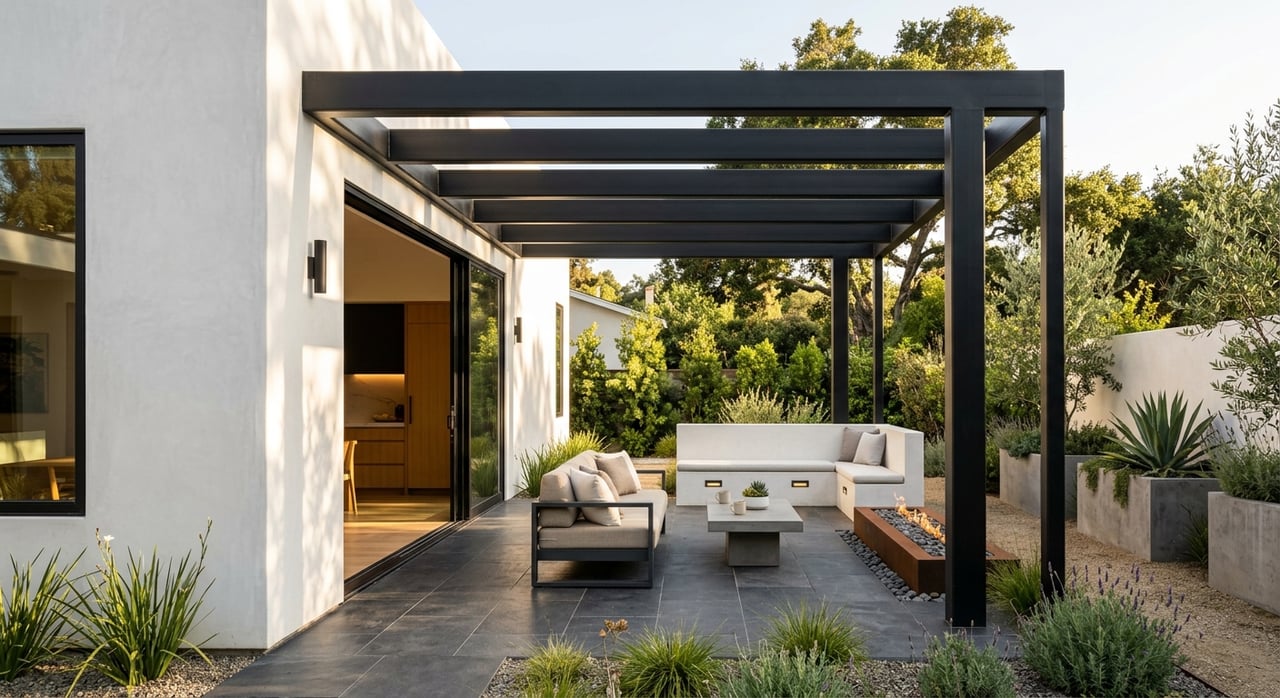
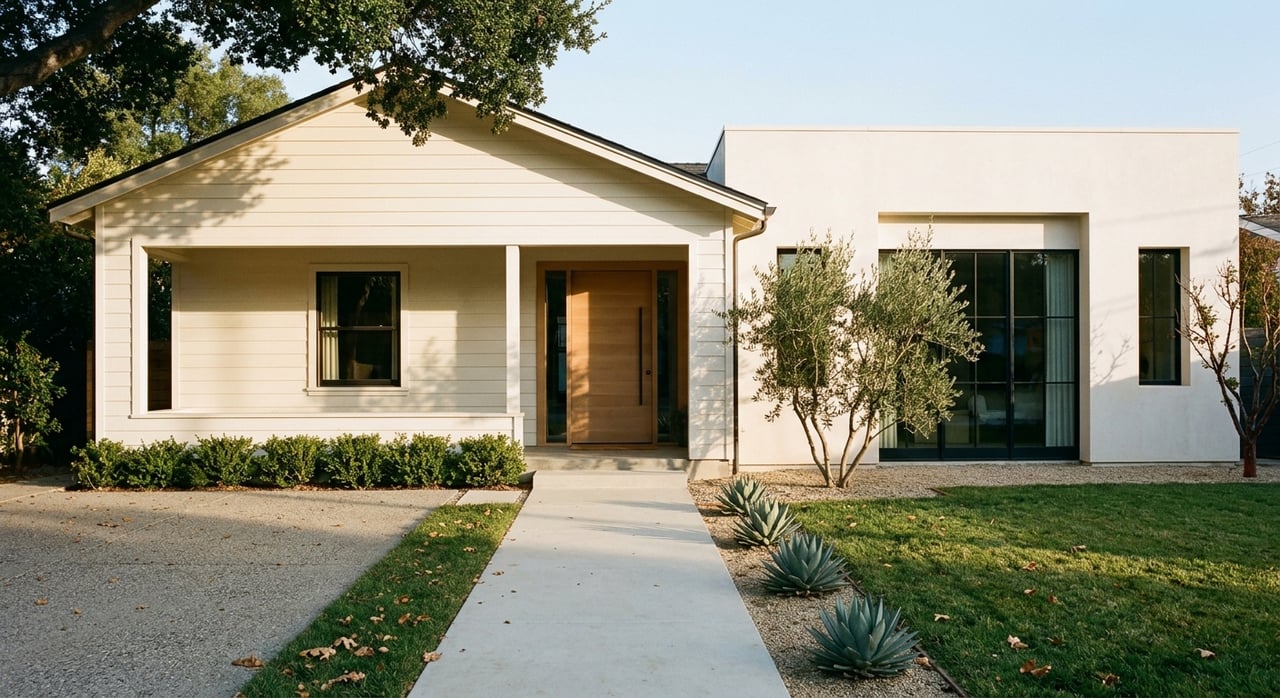
The strongest design approach here is usually contextual rather than oversized. In a neighborhood that values scenic quality, ocean views, and natural landforms, the home should feel composed with the site. That often means breaking up massing, preserving light, and using landscape to make grade changes feel intentional.
Design Moves That Tend to Fit
A design-led spec home in Pacific Palisades often benefits from a few consistent principles:
- Break up massing so the house feels proportional to the terrain
- Frame views without turning the building into a bulky box
- Use terraces, courtyards, and landscape to soften grade transitions
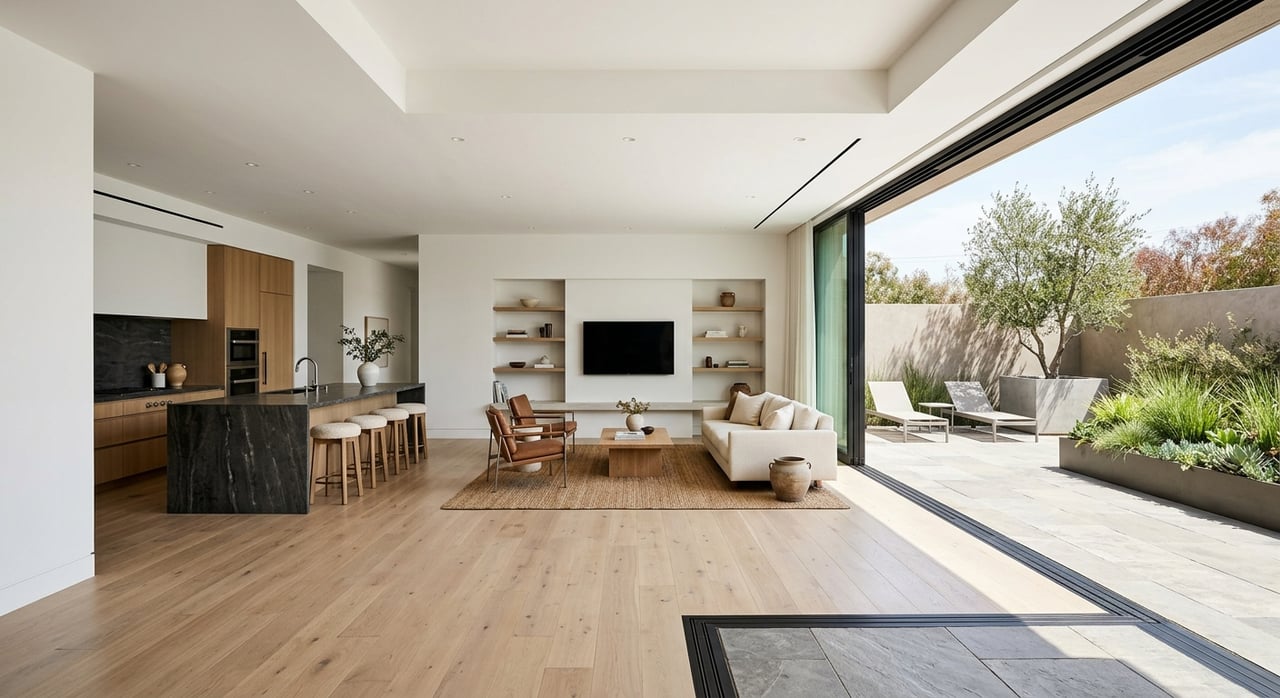
- Prioritize privacy and indoor-outdoor flow
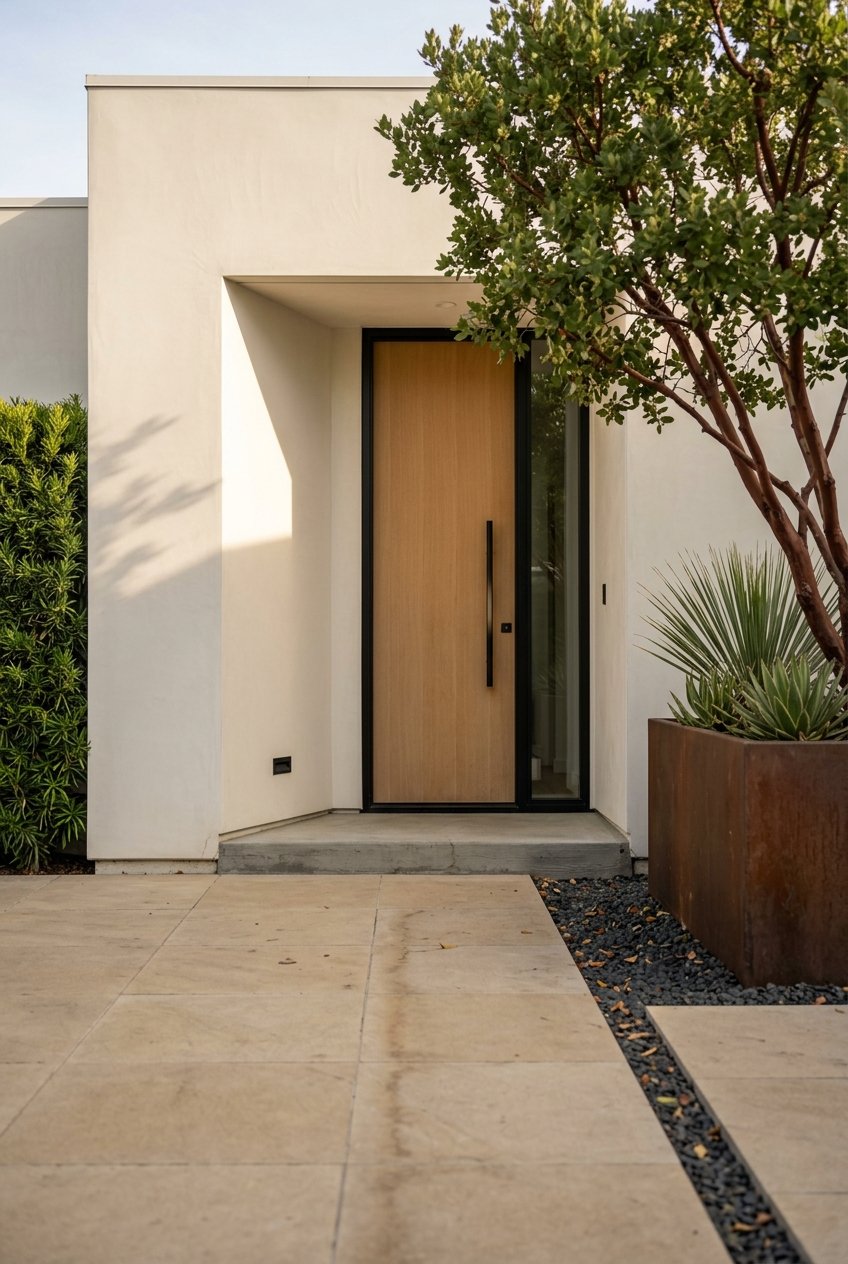
- Choose lower-maintenance finishes that still feel refined
These are not trend moves. They are practical responses to how buyers shop in this market and how the planning context shapes the built environment.
Design Should Match Buyer Expectations
Current listing behavior also gives useful clues. Buyer-facing search categories in Pacific Palisades frequently highlight features like ocean view, large lot, open floor plan, guest house, basement, and energy-efficient homes. That does not mean every spec home needs every feature, but it does suggest buyers are looking closely at how the house functions as a finished product.
A strong spec home here should feel calm, complete, and easy to live in. For a design-led firm, that usually means careful sightlines, restrained material choices, strong indoor-outdoor connections, and details that photograph well because they also live well. In this segment, presentation and usability are closely linked.
Coordination Is Part of the Product
In Pacific Palisades, project execution should be integrated from the beginning. LADBS’ Grading Division oversees soils, foundations, grading, excavations, and fills, and soils or geology reports are usually required before permits are issued. That makes consultant sequencing and permit planning central to the project schedule.
The City’s wildfire recovery system also reflects how much coordination may be needed. Recovery support centers are operating at 1828 Sawtelle Blvd. and 16925 Marquez Avenue, bringing together multiple departments. Even if your project is not an eligible rebuild, this tells you something important about the local environment: approvals and logistics are active, multi-agency, and best handled proactively.
Construction Logistics Need Planning Too
Access and scheduling can affect cost and momentum more than many first-time spec builders expect. LADOT recommends truck deliveries in the Palisades area between 9 a.m. and 3 p.m. on weekdays and 8 a.m. and 6 p.m. on Saturdays to reduce congestion. For a ground-up home or major remodel, delivery planning should be built into preconstruction rather than solved week by week.
That kind of discipline is especially important on tighter or sloped sites. If the parcel is already asking for careful grading, staging, and access management, logistics become part of the design and construction strategy. The smoother the operations plan, the easier it is to protect schedule and finish quality.
The Exit Strategy Should Guide the Design
A Pacific Palisades spec home should usually be marketed as a design object for an end user, not just as square footage. In a market showing about a 97% sale-to-list ratio and roughly 55 to 58 days on market, buyers appear engaged but measured. That makes storytelling, presentation, and product clarity especially important.
The final home should explain itself well. Strong photography, thoughtful staging, and a clear narrative around views, privacy, lot utility, maintenance profile, and overall design logic can help the property stand apart. In this micro-market, the listing strategy is not separate from the project strategy. It is part of the value creation.
Why an Integrated Approach Helps
A design-led spec home in Pacific Palisades asks you to solve for architecture, entitlement, construction, and resale at the same time. When those pieces are handled separately, gaps can appear between what the site allows, what the home becomes, and what the market rewards. That is where projects often lose time or leave money on the table.
An integrated process can help you make earlier, cleaner decisions. If you can connect parcel analysis, design direction, construction planning, and eventual market positioning from the start, you are more likely to deliver a home that feels resolved and performs accordingly. In Pacific Palisades, that kind of alignment is not a luxury. It is often the difference between a beautiful idea and a successful project.
If you are considering a spec home, major remodel, or lot development opportunity in Pacific Palisades, working with a team that can think through design, delivery, and resale together can help you move with more confidence. To discuss your project, schedule a consultation with Steven James Design & Development.
FAQs
What kind of buyer is most likely to purchase a Pacific Palisades spec home?
- The most likely buyer is an affluent owner-occupier looking for a finished, move-in-ready home with strong design, privacy, views, and lower-maintenance new construction.
What site issues matter most for a Pacific Palisades spec project?
- Topography, grading limits, geotechnical conditions, bluff setbacks, coastal review, overlays, and property line confirmation can all shape the design, schedule, and feasibility.
Do fire recovery rules automatically streamline a new spec home in Pacific Palisades?
- No. The City’s EO1 and EO8 pathways are intended for eligible fire-related rebuilds and should not be assumed for ordinary speculative new construction or undamaged vacant lots.
Are there required design standards for single-family homes in Pacific Palisades?
- City Planning says there were no mandated design standards for single-family houses before the fire and none adopted since, but height, floor area, setbacks, and other parcel-specific rules still regulate the project.
Why is geotechnical due diligence so important in Pacific Palisades?
- LADBS requires combined geology and soils reports in certain PGRAZ areas, and soils work may also be needed outside those zones depending on excavation depth or lateral support conditions.
How should you position a design-led spec home for resale in Pacific Palisades?
- The safest positioning is as a well-resolved luxury home for an end user, supported by strong presentation, clear site storytelling, and a design that fits both the parcel and the market.