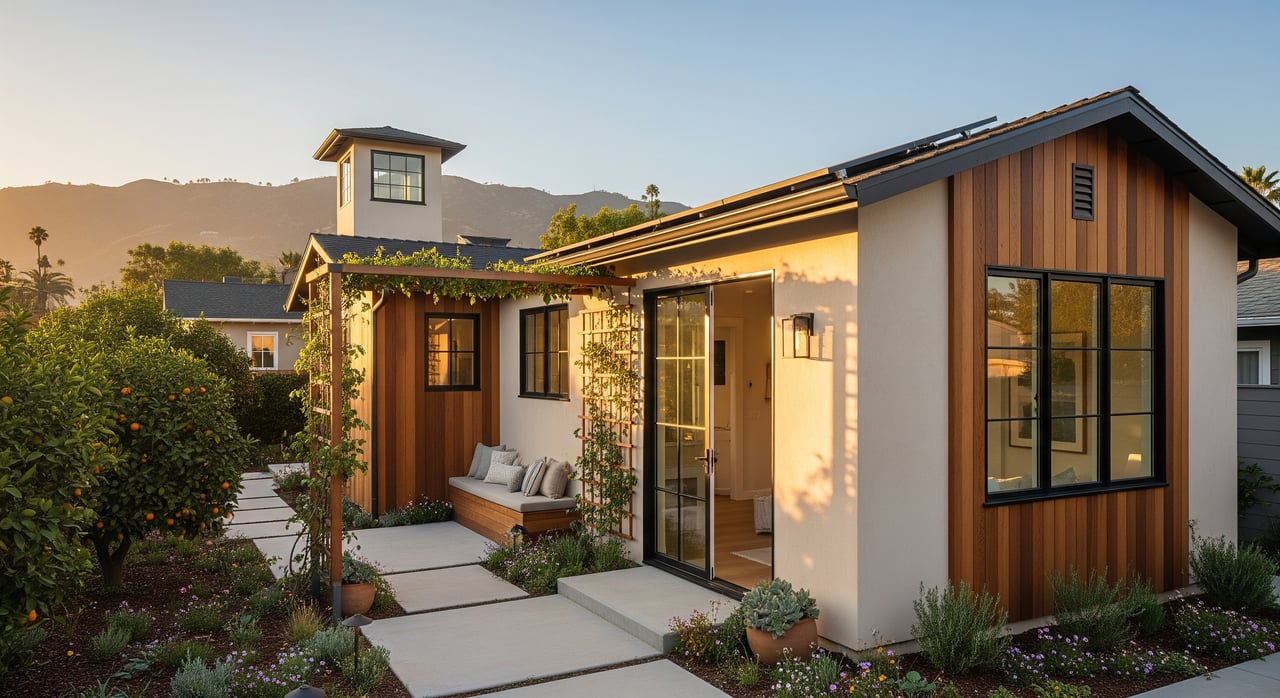
Thinking about building an ADU in Pasadena but unsure if the numbers pencil out? You are not alone. Many owners want clear costs, realistic rent ranges, and a straight answer on payback. In this guide, you will see local cost brackets, who rents ADUs in Pasadena, and simple ROI models that show how long it can take to recoup your investment. Let’s dive in.
Pasadena ADU basics and permitting
California law supports ADUs and sets limits on how cities restrict them. Pasadena follows state rules and applies local objective standards for setbacks, height, utilities, and inspections. Your property’s zoning, lot constraints, and any historic overlays will shape the path and schedule.
Expect a ministerial review that includes plan submittal, plan check with corrections, permits, construction inspections, and final approval. Timelines depend on city workload and project complexity. Lots near light rail or bus routes may qualify for reduced parking based on state rules. If your home is in a historic district, budget extra design coordination. Short-term rental rules are restricted in many cities, so confirm current Pasadena policies before planning any nightly rentals.
What an ADU costs in Pasadena
What drives total cost
- ADU type: garage conversion or internal conversion is usually lowest cost, detached new construction is highest.
- Size and layout: smaller units often cost more per square foot due to fixed kitchen and bath.
- Site work: foundations, retaining walls, utility trenching, and access can add materially in hillside or tight lots.
- Systems and finishes: electrical service upgrades, plumbing runs, insulation, windows, HVAC, and appliance choices.
- Soft costs: architecture, engineering, permits, plan check, impact and utility fees, plus contingency.
Typical cost ranges (illustrative)
- Garage conversion or simple interior conversion: roughly $60,000 to $150,000.
- Attached or detached small ADU, about 400 to 800 square feet with moderate finishes: roughly $150,000 to $400,000.
- Larger or higher-end detached ADU, about 800 to 1,200 square feet: $300,000 to $600,000+.
- Broad per square foot guidance: about $200 to $600+ per square foot depending on scope and finish level.
Always validate with current local bids. Material prices and contractor availability can move these numbers.
Soft costs and line items to plan for
- Architecture and engineering: about 5 to 15 percent of construction cost.
- Permits, plan check, impact and utility connection fees: vary by city and scope.
- Contingency: 10 to 20 percent for unknowns.
- Utility meter upgrades or separate metering: several thousand to tens of thousands if a main electrical upgrade is needed.
- Landscaping, fencing, and driveway adjustments.
Typical timelines
- Feasibility and pre-design: 2 to 6 weeks.
- Design and plan preparation: 4 to 12 weeks.
- Permit review and approval: often 2 to 6 months, project dependent.
- Construction: 2 to 4 months for a conversion, 4 to 10 months for a detached ADU.
- Total planning horizon: about 6 to 18 months from decision to move-in for most Pasadena projects.
What ADUs rent for in Pasadena
Who rents ADUs locally
- Students, faculty, and staff tied to nearby institutions like Caltech and ArtCenter College of Design.
- Medical staff and employees at local hospitals.
- Young professionals and creative workers commuting to central and east LA.
- Multigenerational households that prefer a separate living space.
How to price your ADU
- Pull recent comps for studios and 1-bed units in your immediate neighborhood.
- Compare rent per square foot against similar, conditioned units.
- Add premiums for proximity to light rail, bus routes, Downtown Pasadena, or major employers.
- Value in-unit laundry, private entrance, full kitchen, outdoor space, and separate HVAC controls.
- Decide furnished vs unfurnished based on your preferred turnover risk and return.
Indicative rent ranges
A small studio or 1-bedroom ADU in Pasadena often leases for about $1,500 to $3,000+ per month depending on size, finishes, location, and utilities. Demand near transit, hospitals, and universities can push rents toward the upper end. Always verify with live comps before you model returns.
ROI and payback: the simple math
How to model returns
- Gross annual rent = monthly rent × 12.
- Effective gross income = gross annual rent × (1 minus vacancy rate).
- Operating expenses: property management, utilities, insurance, repairs, landscaping, HOA if any, property taxes, and reserves.
- Net Operating Income (NOI) = effective gross income minus operating expenses.
- Simple payback = total project cost divided by annual net cash flow. Debt service lengthens payback if net rent does not cover payments.
- Cap rate = NOI divided by total project cost.
The following scenarios are illustrative. Replace with your bids and comps to create a project-specific pro forma.
Scenario A: garage conversion, lower cost
- Assumptions: total cost $90,000, rent $1,800 per month, vacancy 5 percent, operating expenses 30 percent of gross rent, no debt.
- Results: gross annual rent $21,600, effective income about $20,520, expenses about $6,480, NOI about $14,040.
- Simple payback: about 6.4 years. Cap rate about 15.6 percent.
Scenario B: detached ADU, mid range
- Assumptions: total cost $275,000, rent $2,600 per month, vacancy 6 percent, operating expenses 35 percent, no debt.
- Results: gross annual rent $31,200, effective income about $29,328, expenses about $10,920, NOI about $18,408.
- Simple payback: about 14.9 years. Cap rate about 6.7 percent.
Scenario C: larger, higher-end detached ADU
- Assumptions: total cost $490,000, rent $3,500 per month, vacancy 6 percent, operating expenses 35 percent, no debt.
- Results: gross annual rent $42,000, effective income about $39,480, expenses about $14,700, NOI about $24,780.
- Simple payback: about 19.8 years. Cap rate about 5.1 percent.
What the examples show
- Lower total cost often equals faster payback. Garage conversions can be compelling.
- High-end builds can earn higher rent but require more capital, which stretches payback.
- Financing changes the profile. Construction loans reduce upfront cash but add debt service, which may lengthen or shorten payback depending on terms and net rent.
Sensitivity tips
- A 10 percent rise in cost lengthens payback. A 10 percent rent increase shortens it.
- Vacancy and operating assumptions matter. If you plan to self-manage, your expense ratio may be lower than if you hire a manager.
- Find break-even rent: total monthly debt service plus monthly operating costs equals the minimum rent you need to cover carrying costs.
Design choices that boost rent and value
High-impact features
- Private entrance for privacy and safety.
- Full kitchen and private bath to reach market-level rent.
- In-unit laundry to meet renter expectations.
- Separate HVAC controls and good sound insulation for comfort.
- Natural light, outdoor access, and a small patio or yard to increase appeal.
- Smart storage and an efficient layout to feel larger than the square footage.
- Step-free entry for broader renter appeal.
- Energy-efficient systems and insulation to reduce operating costs.
- Off-street parking where required or expected, or strong transit access where parking is limited.
Finish-level tradeoffs
- Budget finishes: lowest upfront cost and faster payback, but may increase turnover.
- Mid-level finishes: durable and attractive, often the best balance for long-term value and stable rents.
- High-end finishes: higher rent potential but larger investment. Fit the design to the renter profile you want.
Other design decisions
- Separate meters vs same meter: separate metering can simplify billing but adds upfront cost. Sub-metering is another option.
- Flexibility: plan layouts that work for rental today and family use later.
- Historic areas: confirm exterior design standards early to avoid redesigns or delays.
- Durable materials: reduce long-term maintenance and vacancy downtime.
Financing and operating costs
Common financing paths
- Cash for speed and simplicity.
- Home equity or a cash-out refinance that changes your primary mortgage payment.
- Construction or ADU loans from local lenders that may consider projected rental income.
- Grants or fee reductions when available. Check Pasadena and county programs.
Operating costs to include
- Property management, often 8 to 10 percent of rent for long-term leases.
- Maintenance and repair reserves, often 5 to 10 percent of gross rent.
- Insurance adjustments for rental use.
- Property tax impacts from improvements.
- Utilities and trash, based on your metering and billing setup.
Taxes and legal basics
Rental income, depreciation, and property tax changes matter. Landlord-tenant rules are strict in California. Check with a CPA and a real estate attorney to confirm how rules apply to you.
Your next steps
- Pull 3 to 5 rent comps for similar studios or 1-beds in your Pasadena micro neighborhood.
- Schedule a feasibility conversation with Pasadena Planning or visit the public counter.
- Request two or three ballpark bids from experienced ADU contractors and one architect or designer.
- Build a simple pro forma with your cost, rent, vacancy, and operating assumptions to see payback and cap rate.
- Speak with a lender about construction or equity options and talk with a CPA about tax implications.
Ready to run the numbers for your lot and align design with your rent goals? As a design-led, integrated partner, Steven James Design & Development can help you evaluate feasibility, create a smart plan set, manage construction, and position the unit for leasing or future resale. Schedule a consultation to discuss your project.
FAQs
Pasadena ADU value increase: how much can it add?
- ADUs often increase value, but the amount depends on local demand, build quality, and whether the property remains owner-occupied. A local appraisal or comp analysis after completion is the best way to quantify it.
Pasadena ADU incentives: are there fee waivers?
- Cities sometimes offer fee reductions or expedited processing. Check current Pasadena and Los Angeles County programs, as incentives can change.
Renting strategy: can you live in the main house and lease the ADU?
- Many owners do this for long-term rentals. Confirm owner-occupancy rules, any program restrictions, and your mortgage covenants before you proceed.
Short-term rentals: can an ADU be used for Airbnb in Pasadena?
- Short-term rental regulations are complex and often restricted. Verify current rules for Pasadena before planning for nightly or weekly stays.
Utilities and metering: do you need a separate meter?
- Separate metering simplifies tenant billing but adds upfront cost. Sub-metering or shared utilities are options depending on local utility policies and your site.
Contractor selection: how should you choose a Pasadena ADU builder?
- Use licensed contractors with Pasadena ADU experience, verify insurance, get multiple bids, check references, and set a clear scope, schedule, and change-order process.
Timeline expectations: how long from plan to lease-up?
- Most projects in Pasadena run about 6 to 18 months from decision to move-in. Conversions are usually faster than detached new builds.
Payback estimate: what is a typical ROI timeline?
- Lower-cost conversions may pay back in about 6 to 8 years in favorable cases, while detached builds often range from about 15 to 20 years. Your actual numbers depend on bids, rents, and financing.