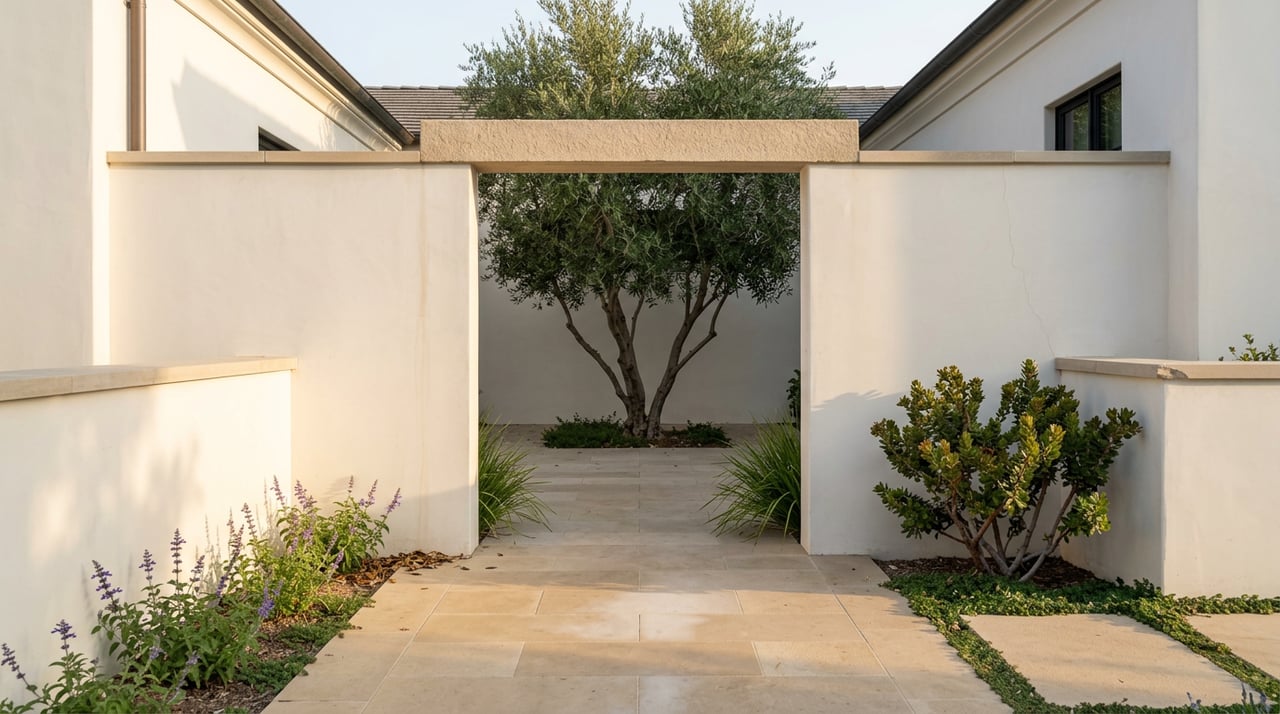
Hikers headed up Curson Avenue toward Runyon Canyon pass it every weekend: a wrought iron gate, tucked into a hillside two blocks from Hollywood Boulevard, with a hand-lettered inscription that reads simply that someone loves this garden and has lent it to you, so please respect the kindness. Most people photograph the gate, assume it belongs to a private estate, and keep walking toward the trailhead. Almost none of them try the latch.
The gate is locked. Wattles Farm is a community garden with membership requirements based on proximity, volunteer work, and plot availability.
A Banker's Winter Estate, Not a Vegetable Patch
The land started as Jualita, the winter retreat of Gurdon Wattles, an Omaha banker who bought roughly 49 acres in the hills above Hollywood Boulevard in the early 1900s. The mansion itself, a Mission Revival house designed in 1907 by architects Myron Hunt and Elmer Grey, still stands at the top of the property on North Curson Avenue. Wattles didn't stop at the house. After a 1910 trip through Japan and Mexico, he brought back a tea house, shrines, and lanterns, and built four distinct gardens on the grounds: one matched to the house's own architecture, one Italian, one American, and one Japanese. None of that was designed to feed anyone. It was designed to impress winter guests.
From Estate Grounds to City Garden
The estate eventually passed into public hands, and the lower fields, the old citrus and avocado groves below the mansion, sat mostly unused until 1975, when then-Mayor Tom Bradley pushed a citywide initiative to convert public land into community gardens. Twelve volunteers answered the call at this particular plot of land. Fifty-one years later, that plot is still there: 4.2 acres carved out of the original orchard, run today by a nonprofit called Wattles Farm and Neighborhood Gardeners Inc. in partnership with the Los Angeles Department of Recreation and Parks. The mansion and its surrounding grounds carry a City of Los Angeles Cultural Monument designation, number 579, granted in 1993. The garden below it has quietly become one of the oldest surviving community gardens in the city.
How Membership Works
Wattles Farm's membership process includes an application, volunteer work, a waiting list, and fees.
To even qualify for the waiting list, a prospective member has to clear a specific sequence:
- Live within a five-mile radius of the garden and submit a membership application.
- Show up for three consecutive monthly Clean-Up Weekends, usually the second weekend of the month, working alongside current members for an hour and a half each time.
- Wait. Plots open at irregular intervals, and there is no set timeline for when one becomes available.
- Once a plot opens, meet a Garden Master for a tour and orientation, then pay a one-time $22 fee for the entrance key and manual.
- Pay annual dues that currently run about $200, due each June, with a $15 late fee if payment slips past July 31.
There's no fast track, premium tier, or way to buy a plot outright; even after completing the required steps, applicants must wait for a plot to open.
What Grows in the Garden
Walk the paths on a clean-up Saturday and you can see what's growing. Tomatoes, cucumbers, and dill dominate the summer beds, while beets and hardy greens take over in winter. Around them sit the remnants of the original orchard, avocado and citrus trees now over a century old, including a section still known informally as the Herschel Gilbert Avocado Grove. Members have added an herb garden, a cactus garden, a shared grape arbor, and two small vineyards, all tended in rotation by whoever's plot happens to be nearby that week.
None of this is visible from Curson Avenue. From the street, the garden reads as a wall and a locked gate. From inside, it reads as a working patchwork of family plots, each one shaped by whoever waited long enough to get one.
A Public Dinner at Wattles Farm
Outstanding in the Field, a touring dinner series that sets a single long table inside working farms and gardens around the country, has staged an evening at Wattles Farm with head gardener Toby Leaman as host. The table runs directly alongside the tended plots and fruit trees, with a guest winery pouring for the night and the crowd sitting exactly where members usually kneel to weed. Guests book through the touring company's own site rather than through the farm.
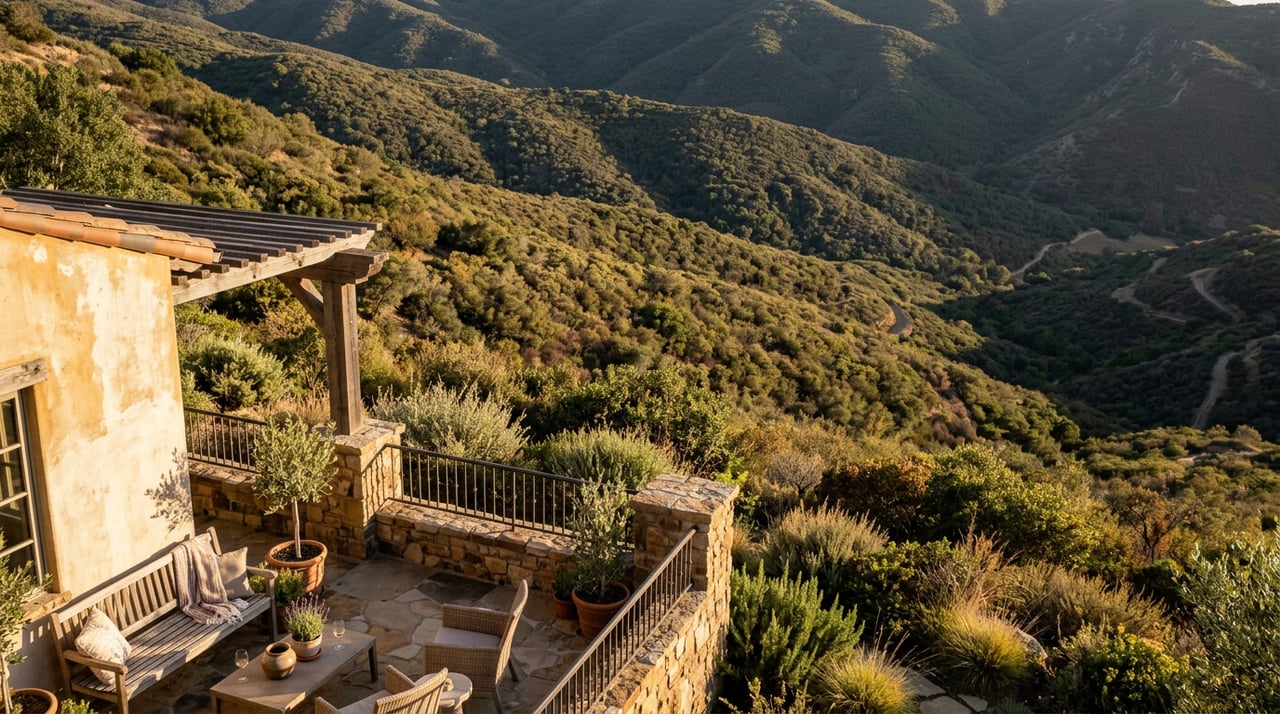
That's the part worth sitting with if you live up here. The Hollywood Hills reward people who slow down enough to notice what's actually behind the walls they pass every day. A locked garden gate on the way to Runyon Canyon turns out to be a fifty-one-year-old civic experiment with its own election cycle, its own waiting list, and its own volunteer requirements. You can drive past it for years and never know any of that. Or you can start asking what else in this neighborhood looks ordinary from the street and isn't.
If you're thinking about a hillside property near Wattles Park, or anywhere else in the canyons, and want a partner who reads a neighborhood at this level of detail before making design or investment decisions, Steven James Design & Development is glad to sit down and walk through it with you. Schedule a consultation to discuss your project.